Publication: TimesLive
Author: Luncedo Mtwentwe
Photo: Unspecified
Well-intentioned labour reforms carry some risky outcomes for SMEs
New amendment bill could have drastic consequences for both employees and employers
April 12, 2026 at 12:00 am

Thanks to the likes of Checkers Sixty60, our gig economy is projected to grow by 10% every year, but the estimated 2-million South Africans working in it usually don’t have the protections that traditional employees take for granted, says the writer. File photo. (supplied )
South Africa is once again attempting to modernise its labour framework, this time to catch up with the realities of platform work, freelancing and the gig economy.
The Labour Law Amendment Bill 2025, which closed for public comment last month, proposes sweeping changes across multiple pieces of legislation. Among the most consequential is an expanded definition of what constitutes an “employee”, alongside new protections for workers who have historically fallen outside formal labour structures.
At face value, the intent is difficult to argue with. Thanks to the likes of Uber and Checkers Sixty60, our gig economy is projected to grow by 10% every year, but the estimated 2-million South Africans working in it usually don’t have the protections that traditional employees take for granted. They frequently carry the cost of tools, transport and risk while operating under conditions that resemble employment more than independence.
As with many well-intentioned reforms in South Africa, the question now is how this change plays out in practice. For many SMEs, flexibility is a survival mechanism.
Freelancers, contractors and project-based workers allow small firms to scale work up
or down, manage cash flow, and access skills they could not otherwise afford on a permanent basis.
The proposed reforms introduce a new layer of uncertainty into that model. They propose more structured requirements around irregular and on-call work, including defined availability periods and compensation for last-minute cancellations.
It’s a layer of legal interpretation that most SMEs are neither equipped nor resourced to manage.
Zohakly Mbi-Njifor, CEO of Endless Life Group, a pan-African business development and advisory firm, explains that the proposed framework introduces a presumption of employment, placing the burden on businesses to prove that a worker is genuinely independent. In practical terms, this means demonstrating limited control, no organisational integration, and clear independence of operation. It’s a layer of legal interpretation that most SMEs are neither equipped nor resourced to manage.
If a contractor is later deemed to be an employee, the implications can include backdated benefits, statutory obligations, and potential exposure to labour disputes. For a small business operating on tight margins, the risk of misclassification becomes a major compliance issue.
Sasha Knott, CEO of Job Crystal, an AI recruitment platform, points out that many SMEs rely on freelance models precisely because they reduce administrative burden and cost. Increasing complexity, she argues, may make businesses more cautious about engaging in flexible work at all.
An overly broad or unclear definition of “employee” could, according to Anton van Heerden, CEO of DNA EOR, also discourage global firms from hiring South African talent. More and more South Africans work remotely for international companies under contractor arrangements, but uncertainty could push these firms towards informal arrangements that leave both parties exposed.
The question, then, is how this should be addressed. We know that labour reform must protect workers, but if not carefully calibrated, it can make the simple act of hiring feel like a liability. When small businesses become afraid to hire, they delay, reduce, or avoid it altogether, leaving the wider employment sector to absorb the fallout.
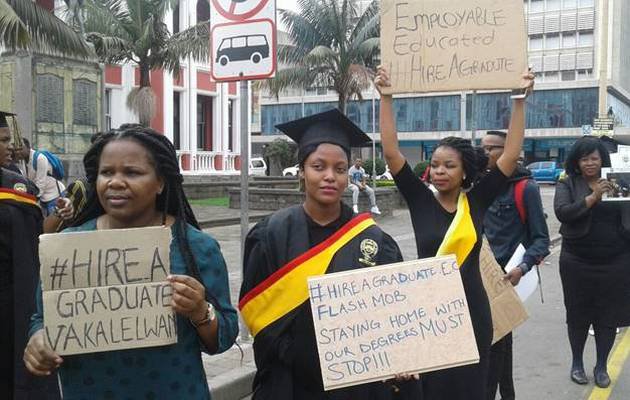
South Africa’s labour market is already under significant strain, and youth unemployment is one of the country’s most pressing structural challenges. Platform work has created income opportunities, particularly for young people, but often without stability, predictability or protection.
While business groups have raised concerns that expanding the definition of an employee could blur the line between genuine independent contracting and employment, introducing legal ambiguity into everyday commercial arrangements, they also broadly agree that the gig economy cannot remain unregulated.
In this context, reform is necessary, and some elements of the bill, such as proposed changes to simplify dismissal procedures and reduce hiring risks, can work in favour of SMEs.
The government has the tricky task of trying to extend worker protections in emerging forms of employment while attempting to make hiring easier and less risky for businesses. Both objectives are valid, but without clarity they risk working against each other.
Rather than imposing blanket complexity across the entire labour market, targeted regulation on large platform businesses where the risks of exploitation are highest, as suggested by Ravi Naidoo of the Youth Employment Service, may be a more effective approach.
The coming months will be critical as the final framework takes shape, and whether it will clearly distinguish between these two very different realities remains uncertain. If that line is not drawn with clarity, SMEs will respond rationally by limiting their exposure to risk, and in an economy that relies on small businesses for job creation, that is a risk South Africa cannot afford.


 Amendment to the Gazette